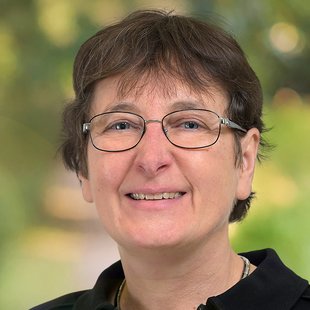
PD Dr. Heidi Kreibich
GFZ - Helmholtz Centre for Geosciences, Germany
heidi.kreibich@gfz.deHeidi is head of the Section Hydrology at GFZ in Potsdam and leads the Working Group on ‘Flood Risk and Climate Adaptation’. Together with her team, she advances process understanding and develops innovative approaches for flood risk assessment. Her work primarily focuses on flood vulnerability analysis and loss modelling, as well as flood damage mitigation, risk management, and the development of adaptation strategies.
Within LIMIT2ADAPT, the GFZ team will concentrate on the physical vulnerability of households to riverine flooding. This includes developing exposure and physical vulnerability maps for both past and future scenarios, creating a global flood damage model, and improving understanding of the factors that influence households’ adaptation decisions—and how these decisions, in turn, affect their physical vulnerability and overall flood risk.
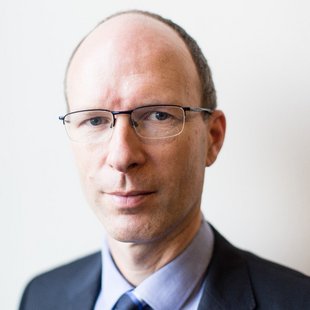
Prof. Jeroen Aerts
VU University Amsterdam, The Netherlands
jeroen.aerts@vu.nlJeroen and his team is specialized in assessing flood risks and options for climate adaptation through combining risk assessment methods, hydrological models, and (agent-based) behavioural models. With these combined models, he shows how people (from local scale households to the government) respond to flood risk --depending on changing hydrological and socio-economic conditions.
Within LIMIT2ADAPT, the VU team will concentrate on simulating adaptation decisions by households using a global agent-based model. Adaptation decisions are modelled as spatial – temporal decisions where agents interact with their physical environment and agents’ adaptive decisions are also influenced by other agents. The agent-based model will simulate adaptation decisions of millions of households in flood zones at a yearly basis, over a time period of about 100 years. Households interact with governmental adaptation policies and are influenced by changes in (1) hydrological flood conditions provided by the Bristol team, (2) changes in the physical vulnerability of buildings and infrastructure (provided by the GFZ team) and (3) socio-economic characteristics of households (provided by the Princeton team)
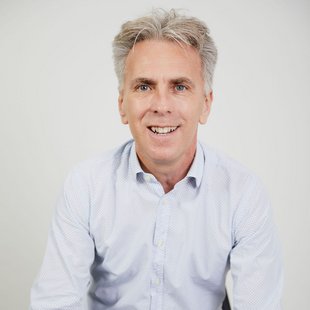
Prof. Paul Bates
University of Bristol, United Kingdom
Paul.Bates@bristol.ac.ukPaul Bates is Professor of Hydrology at the University of Bristol where he specialises in the science of flooding. He is also Chairman of the flood risk analytics company Fathom (www.fathom.global). He develops new numerical solutions to the Shallow Water equations and combines these with satellite and airborne data to advance our fundamental understanding of flood dynamics and reduce threats to life and economic losses worldwide. His work is used by multiple researchers, NGOs, multi-national companies and insurers to manage flood hazard and risk. He is a Fellow of the Royal Society of London and of the American Geophysical Union, an International Member of the US National Academy of Engineering and in 2019 was made a Commander of the British Empire for services to flood risk management. In 2024 he was awarded the John Dalton medal by the European Geosciences Union and in 2025 he received the Ven Te Chow award from the American Society of Civil Engineers.
Within LIMIT2ADAPT, the University of Bristol team will focus on the modelling of physical flood hazards at global scales under different climate futures and integrating these simulations with VU’s agent-based behavioural model.
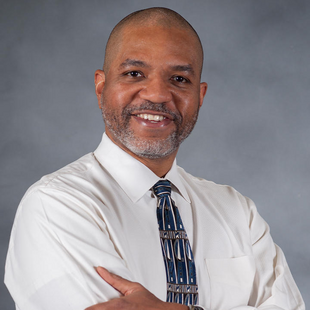
Prof. Eric Tate
Princeton University, United States of America
eric.tate@princeton.edu